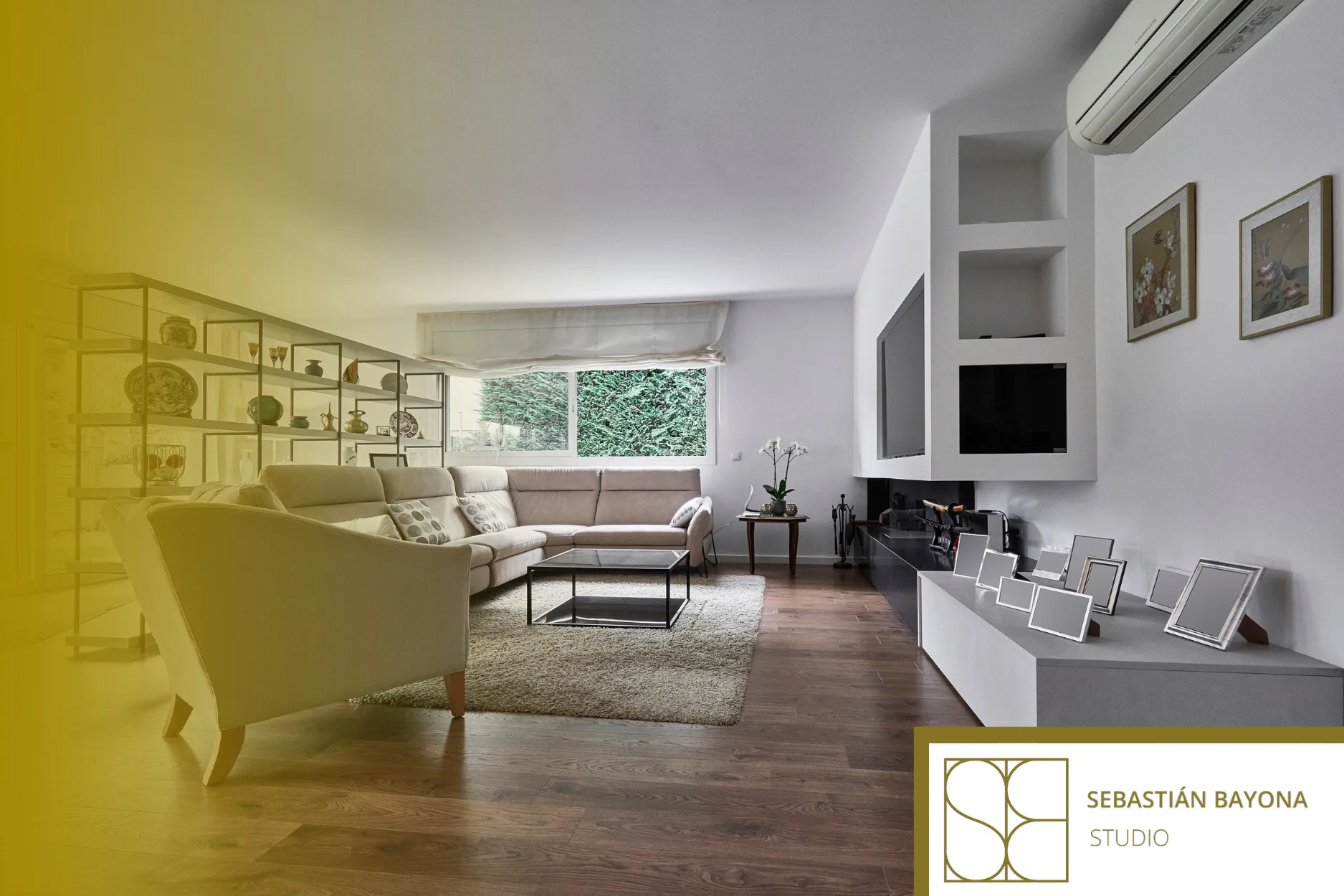
Good living room lighting starts with several independently controlled light sources rather than one fitting expected to do everything. Reading calls for focused light, television viewing benefits from gentle background illumination, and entertaining requires a comfortable balance of brightness. Planning these situations together allows the same living space to feel practical during the day and more restful in the evening.
One living room, several ways of living
A living room is rarely used for just one activity. It may accommodate conversation, reading, television, relaxation, dining or occasional work, sometimes within the same afternoon.
Yet lighting is often approached as though the room had a single purpose. A central ceiling fixture or a uniform grid of recessed downlights may provide adequate brightness without allowing the atmosphere to respond to different activities.
A more thoughtful approach begins with the people and furniture. Where will someone sit to read? Which seats face the television? How does daylight reach the room, and what happens after sunset?
These questions are more useful than selecting decorative fittings before the layout has been resolved. Each light source should have a reason to be there and a clear role in everyday life.
During the day: working with natural light
Living room lighting begins with daylight. Window positions, orientation, surrounding buildings and the depth of the floor plan all affect how much natural brightness reaches different areas.
It is worth observing the room at several times of day. Direct sunlight may be welcome in one position yet create uncomfortable glare on a screen or polished surface elsewhere.
Curtains and other forms of solar control can help manage these changes without unnecessarily darkening the interior. Furniture placement is equally important: a tall storage unit beside a window may obstruct light that could otherwise reach further into the room.
In deeper living spaces, a small task lamp may be useful even during daylight hours. Artificial lighting should support activities where natural light is insufficient rather than automatically illuminate every corner.
Our article on making better use of natural light in deep apartments explores this relationship between layout and daylight.
For reading: put the light where the task happens
Reading requires a different lighting arrangement from socialising. The priority is to provide sufficient illumination across the pages without creating glare or unnecessary brightness throughout the room.
An adjustable floor lamp or a carefully positioned wall light can serve a reading chair or sofa. Its location matters: a poorly placed fitting may cast shadows precisely where light is needed.
The height of the lamp, direction of the beam and possibility of dimming should be considered together. The reading area can remain comfortably lit while the rest of the room retains a softer atmosphere.
For watching television: control contrast and reflections
Watching television in a completely dark room can create a strong contrast between the screen and its surroundings. Too much general light, on the other hand, may produce distracting reflections.
A useful solution is gentle background illumination that makes the surrounding area visible without shining directly into the screen or towards seated viewers.
Indirect lighting near the television wall, a softly diffused side lamp or a discreet wall light may help achieve this balance. Placement is more important than decorative effect: visible light sources should not create glare from the normal viewing position.
Ideally, the television lighting scene should be available without switching on the room's full general lighting.
For entertaining: light that supports conversation
When a living room is used for conversation or entertaining, the lighting should make faces comfortably visible and allow people to move around without the room feeling excessively bright.
Combining a soft ambient base with table lamps, wall lights or floor lamps can create a more balanced effect than relying on one powerful overhead source.
Light can also help organise the room visually. A softly illuminated wall introduces depth, while a lamp beside a seating group can establish a more intimate conversation area.
Where the living and dining areas share one open space, independent controls become particularly useful. The dining table may need more direct illumination while the adjacent seating area remains at a lower intensity.
The goal is to support each activity without making the entire open-plan space look or feel identical.
In the evening: a calmer atmosphere through softer light
Later in the day, the living room may no longer require the level of general illumination useful for active tasks. Lower-intensity light sources can take over, allowing the room to feel quieter without becoming difficult to navigate.
Warm-white lighting is often suitable for residential living areas. Colour temperatures around 2700–3000 K are common starting points, although materials, personal preferences and the room's functions should determine the final selection.
Dimming gives the room flexibility without forcing a choice between full brightness and darkness. When using dimmable LED fittings, compatibility between the light source, driver and control must be checked to avoid poor performance.
Rather than designing one fixed evening atmosphere, it is preferable to allow light levels to respond naturally to the activity taking place.
For practical tasks: general lighting still matters
A living room also needs to function when cleaning, organising belongings or carrying out other household tasks. These situations usually benefit from a more even distribution of light across the room.
Appropriately planned general lighting provides useful visibility without depending on small decorative lamps. Its purpose is to support practical activities, not to remain switched on at the same brightness throughout the evening.
Independent controls allow general lighting to be used when needed and switched off when more localised light is sufficient.
Create lighting scenes rather than complicated controls
A lighting scene is a combination of selected fittings and brightness levels suited to a particular use. A living room might have separate settings for reading, television, entertaining and general activities.
This does not automatically require an elaborate smart-home system. Well-organised lighting circuits, accessible switches and suitable dimmers may provide all the flexibility a particular home needs.
The most important quality is ease of use. A lighting scheme loses much of its value when achieving a comfortable setting requires navigating complicated controls.
For a broader explanation of how these lighting functions work throughout a home, see our guide to layered residential lighting.
Furniture and materials shape how light behaves
Lighting should not be designed independently from the furniture. A reading lamp needs to correspond to the position of the chair. A wall light near the sofa must take account of sightlines and the height of seated occupants.
Integrated shelf lighting requires coordination with the depth and divisions of the joinery. Similarly, a pendant over a dining table should relate to the table's actual position and proportions.
Materials also affect the result. Glossy finishes can create reflections, while matte surfaces and textured materials influence the appearance of shadows and depth.
Considering these relationships before electrical installations, ceilings and fitted furniture are finalised makes it easier to achieve a coherent result without unnecessary adjustments later.
A well-lit living room can change with everyday life
The most successful lighting design is not necessarily the most visually dramatic. It is the arrangement that allows a room to support different activities without forcing its occupants to adapt to one fixed lighting condition.
At Sebastián Bayona Studio, a residential interior design practice based in Barcelona, we approach lighting as part of the complete home. Layout, furniture, materials and illumination are developed as connected design decisions.
If you are renovating your living room or reconsidering how your home works, tell us about your project. Good lighting begins with understanding what happens in each space and how it should feel at different moments of the day.
FREQUENTLY ASKED QUESTIONSWhat is the best lighting for a living room?
A flexible combination of general, task and ambient lighting works well for many living rooms. Independent controls make it easier to adjust the room for reading, entertaining, watching television and relaxing.
What colour temperature is best for living room lighting?
Warm-white lighting around 2700–3000 K is a common choice for residential living rooms. The ideal temperature depends on the materials, activities and personal preferences involved.
How should a living room be lit for watching television?
Soft background lighting can help reduce the contrast between a bright screen and its surroundings. Avoid direct reflections on the screen and visible fittings that create glare from the seating position.
Can living room lighting be improved without renovating?
Yes. Adding floor lamps, table lamps or dedicated reading lights can make the room more flexible. Electrical modifications should be assessed and carried out by qualified professionals where necessary.