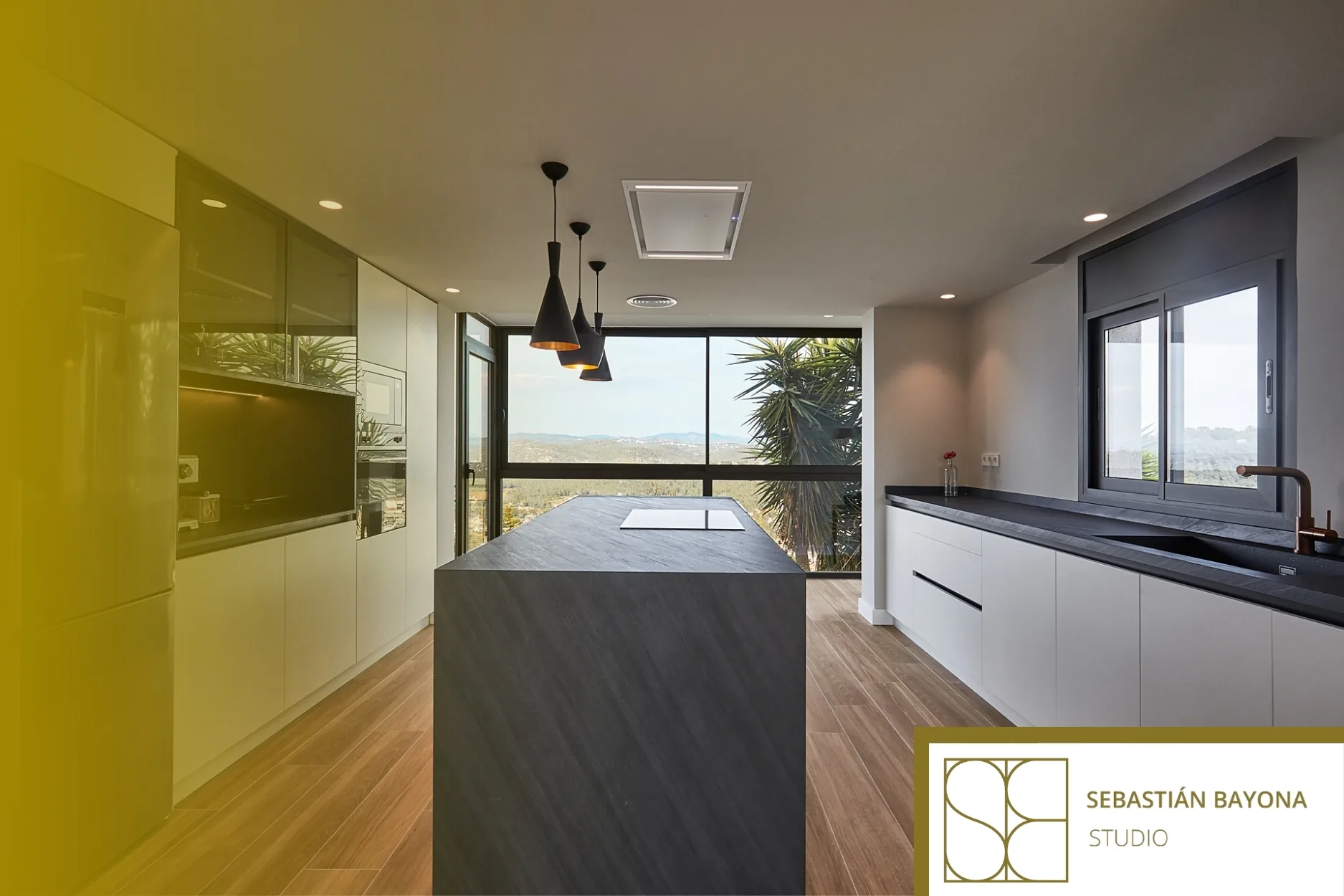
A kitchen island works when the room allows comfortable circulation and the island solves a clear need: preparation, cooking, washing, storage or informal gathering. If it narrows routes, clashes with appliance doors or occupies the centre without a defined purpose, it is usually better to leave it out. The decision should start with the plan and everyday routines rather than a preferred image.
The first question is not whether an island fits but how the kitchen is used
An island can organise a kitchen well, but it can also become an obstacle. Before drawing one, consider who cooks, how many people use the kitchen at once, where groceries are stored and which routes connect it with the rest of the home.
A kitchen is a sequence of actions: taking ingredients out, washing, preparing, cooking, serving and clearing away. If an island makes that sequence shorter and more intuitive, it has a reason to be there. If everyone has to walk around it repeatedly, it is working against the room.
When a kitchen island adds real value
An island is useful when it creates extra work surface without breaking up the kitchen, provides accessible storage or establishes a comfortable connection with dining and living areas.
It can also concentrate a function: preparation, washing, cooking or informal seating. Each choice affects services, ventilation, lighting and maintenance, so its role should be defined before the project is fixed.
At Sebastián Bayona Studio, kitchen design is considered as part of the home as a whole, relating layout, materials, lighting and furniture to the way the space is lived.
Clear space around the island matters more than the island itself
An island should not be judged by its dimensions alone. What matters is what happens around it when drawers, the dishwasher, oven or refrigerator are open and when several people need to move at the same time.
There is no single island size that suits every home. Available width, door and window positions, perimeter cabinetry and the number of users all affect the right solution.
A common mistake is to squeeze circulation in order to make an island fit. The kitchen may gain worktop space but lose ease of movement. Before adding a central element, check that routes remain clear.
When a kitchen without an island works better
Leaving out the island does not mean accepting a less functional kitchen. In narrow or compact rooms, a linear layout, an L-shaped kitchen or two parallel runs can keep the centre open and make movement easier.
It can also be the better choice when the middle of the kitchen forms part of a regular route between rooms. Putting an island on that path creates a permanent detour.
In other homes, the priority may be a generous dining table or a flexible open area. In these cases, an empty centre may be more useful than another fixed element.
A peninsula can be the better middle ground
Where a freestanding island needs too much clearance, a peninsula can add worktop, storage or informal seating while requiring circulation on fewer sides.
In some plans, it can define the kitchen without enclosing it. Its success depends on whether the connection to the cabinetry clarifies or blocks movement.
Decide what the island is actually for
Before discussing finishes or dimensions, answer one question: what job does the island need to do?
If it is mainly a preparation surface, a continuous and well-lit worktop may be the priority. If it contains a sink or hob, services, ventilation and landing space need to be coordinated. If it is used for eating, the seating zone must work without interfering with people still preparing food.
Storage should be considered just as carefully. A deep island can provide volume, but that does not automatically make it useful if the interior is awkward to access.
An island and an open-plan kitchen are not the same decision
An open-plan kitchen can work perfectly without an island, and an island can exist in a kitchen that retains some separation from the living room. The two decisions are related but not interchangeable.
The island should be chosen only after deciding how cooking, dining, conversation and movement should relate to one another.
A good decision should be easy to explain
The best island is not the largest one or the one containing the most features. It is the one that improves daily use without compromising circulation, keeps the room balanced and has a clear role.
Sebastián Bayona Studio is a residential interior design studio in Barcelona that approaches kitchens, layout, lighting, materials and furniture as connected parts of the same home.
FREQUENTLY ASKED QUESTIONS
How much space do you need for a kitchen island?
It should not be decided from total floor area alone. Useful width, cabinet and appliance openings, working zones and the space needed for people to pass all matter. An island is only worthwhile when those movements remain comfortable.
Is it better to put the sink or hob on the island?
It depends on the cooking routine and the position of services. A sink or hob can improve the working sequence, but it also requires coordination of water, power, ventilation, lighting and landing space.
What can you use if there is not enough room for an island?
A peninsula, an L-shaped layout, two parallel runs or a single-wall kitchen may work better depending on the plan. The right alternative adds useful surface and storage without making circulation more difficult.
Does an open-plan kitchen need an island?
No. An open kitchen can use a peninsula, a table, a linear run or an L-shaped layout. What matters is how the kitchen relates to living and dining areas in everyday use.