A personal home is not built from generic objects
A home becomes recognisable when it can hold the history of the people who live there. A painting bought years ago, a photograph, books that are genuinely read, inherited ceramics or a slowly assembled collection can carry meaning that has little to do with trends.
Interior design can give that diversity structure without neutralising it. The aim is not to fill every surface, but to decide what deserves prominence, what needs protection and what can remain quieter. A home that leaves room for personal pieces can continue to evolve without losing coherence.
Art needs a relationship with architecture
Artwork is never perceived in isolation. Wall size, ceiling height, natural light, the route from which a work appears and the furniture within the same visual field all influence how it is read.
This is why art is worth considering while the interior architecture is still being developed. One large wall may call for a single strong piece; the end of a sightline can become a natural focal point; a room with expressive materials may need more restraint.
Sebastián Bayona Studio approaches residential interiors through the combined consideration of layout, light, materials and furniture, starting from the client's way of living.
Scale, viewing distance and background
Artwork should not be sized only according to the width of an empty wall. Viewing distance matters. A large work needs enough space to be read comfortably, while a small piece can gain intensity in a more intimate setting above a console or in a contained corner.
The background also matters. Wall colour, strong grain, texture or nearby joinery can support a piece or compete with it. Furniture provides another scale reference, but every edge does not need to align. Empty space is useful too: it gives the eye somewhere to rest and allows a work to hold its place without extra decoration.
Light art without turning the room into an exhibition
Good artwork lighting is not a matter of aiming a strong spotlight at every piece. Light should make the work legible within the atmosphere of the room while avoiding distracting glare, reflections or excessive contrast.
Some artworks and objects are light-sensitive, and professional conservation guidance notes that light damage can be cumulative and irreversible. Exposure level, duration and ultraviolet radiation all matter for sensitive materials.
At home, that means avoiding direct sunlight on delicate pieces and not assuming every work requires the same lighting. Valuable or materially sensitive works may need specific conservation advice. Accent lighting is most convincing when it belongs to a wider scheme that also supports circulation, conversation and everyday tasks.
Collections, books and everyday objects
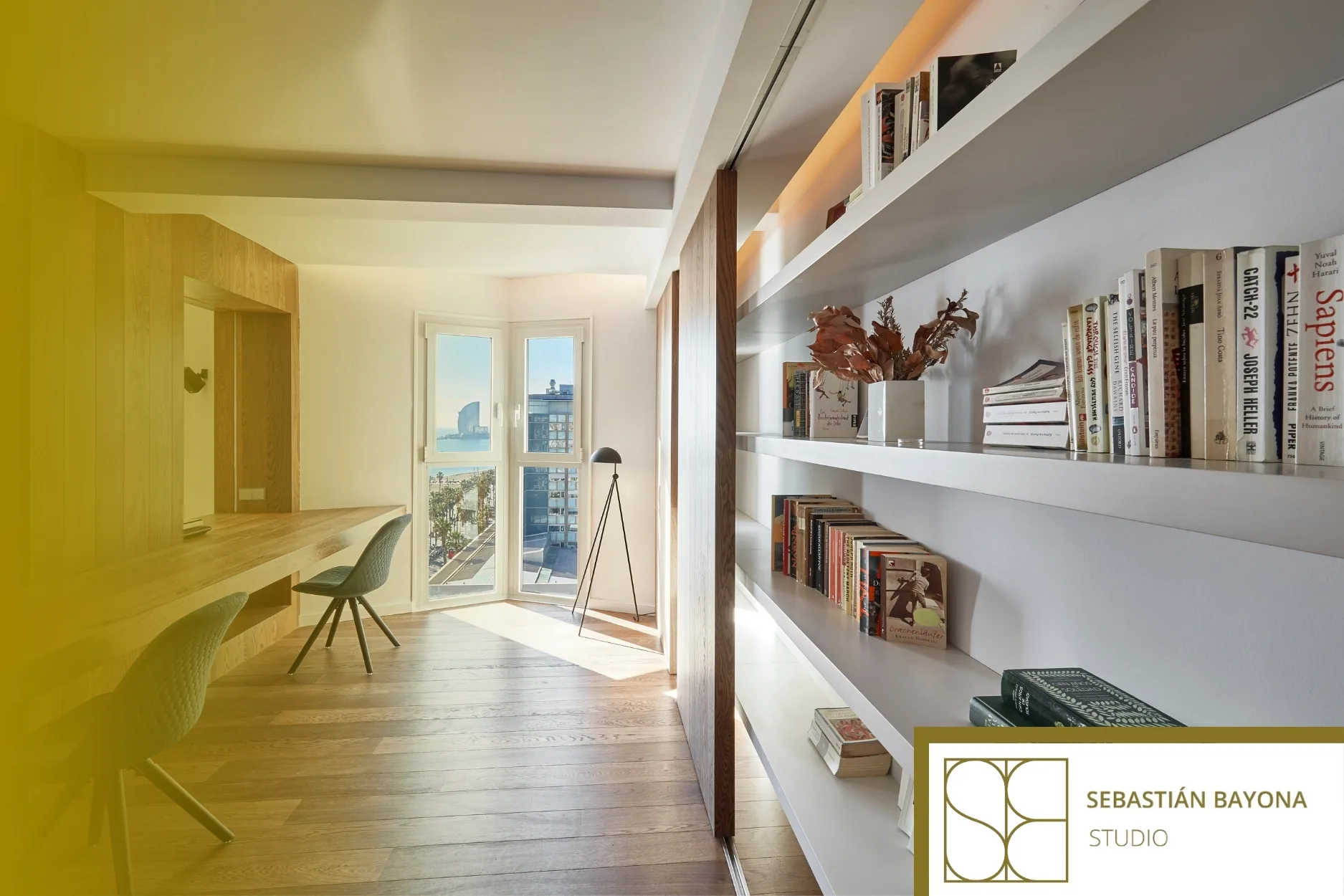
Personal identity does not live only on walls. Books, small sculptures, travel objects, ceramics and photographs can occupy shelves, niches, consoles or display cabinets. The challenge is usually editing: showing enough to make a collection meaningful without turning every surface into a display.
Grouping by affinity, scale or rhythm creates clarity. A bookcase can alternate books, empty space and selected objects; a cabinet can concentrate smaller pieces; a pedestal can give one sculpture independence.
Where a collection requires it, bespoke furniture can connect display, storage and architecture. Sebastián Bayona Studio's current website confirms bespoke furniture as part of its residential service.
Design space for the home to evolve
Collections change. New books arrive, an artwork moves to another room and some objects disappear from view for a while. A good interior should absorb that evolution.
Dimmable lighting, surfaces with spare capacity, furniture that can be rearranged and display areas that are not dependent on one object make the home more adaptable.
Storage matters for the same reason. Editing does not mean discarding everything that is not visible. It can mean rotating pieces and preventing visual overload by giving the rest an appropriate place.
Personality appears when the design leaves room
A personal interior does not need to announce its owner's identity in every corner. It should make interests, memories and choices feel natural while allowing the architecture to remain legible.
That balance requires hierarchy. Some artworks deserve a wall of their own; others work better in a group. Some need dedicated light; others belong within a more domestic composition.
The Sebastián Bayona Studio project portfolio shows homes developed around different styles and requirements. The studio's philosophy is that each home should grow from the person who lives in it and be designed for everyday use.
If art, books or a collection are central to the way you live, explore the studio's design approach or get in touch before decisions about walls, lighting and furniture become fixed.
FREQUENTLY ASKED QUESTIONS
What height should artwork be hung at?
There is no single height that works in every home. Consider the visual centre of the piece, eye level, viewing distance, wall dimensions and nearby furniture. Above a sofa or sideboard, the relationship between the artwork and the furniture is often more useful than following one isolated measurement.
How should art be lit at home?
Lighting should make the work easy to see without uncomfortable glare or reflections and should respond to its materials. Light-sensitive pieces require particular care with intensity, exposure time and ultraviolet radiation. Valuable or delicate works may need specific conservation guidance rather than a standard domestic lighting rule.
Should the home or the art collection be designed first?
When a collection is important, they are best considered together. Knowing dimensions, lighting needs and display preferences early allows the design to accommodate walls, sightlines, power points, lighting and furniture without making the home rigid around individual works.
How can personal objects be displayed without making a room feel crowded?
Create hierarchy, group related pieces and keep areas of visual rest. Everything does not need to be on display at once. Bookcases, cabinets, pedestals and bespoke furniture can combine display with storage so that objects can be rotated as the collection evolves.