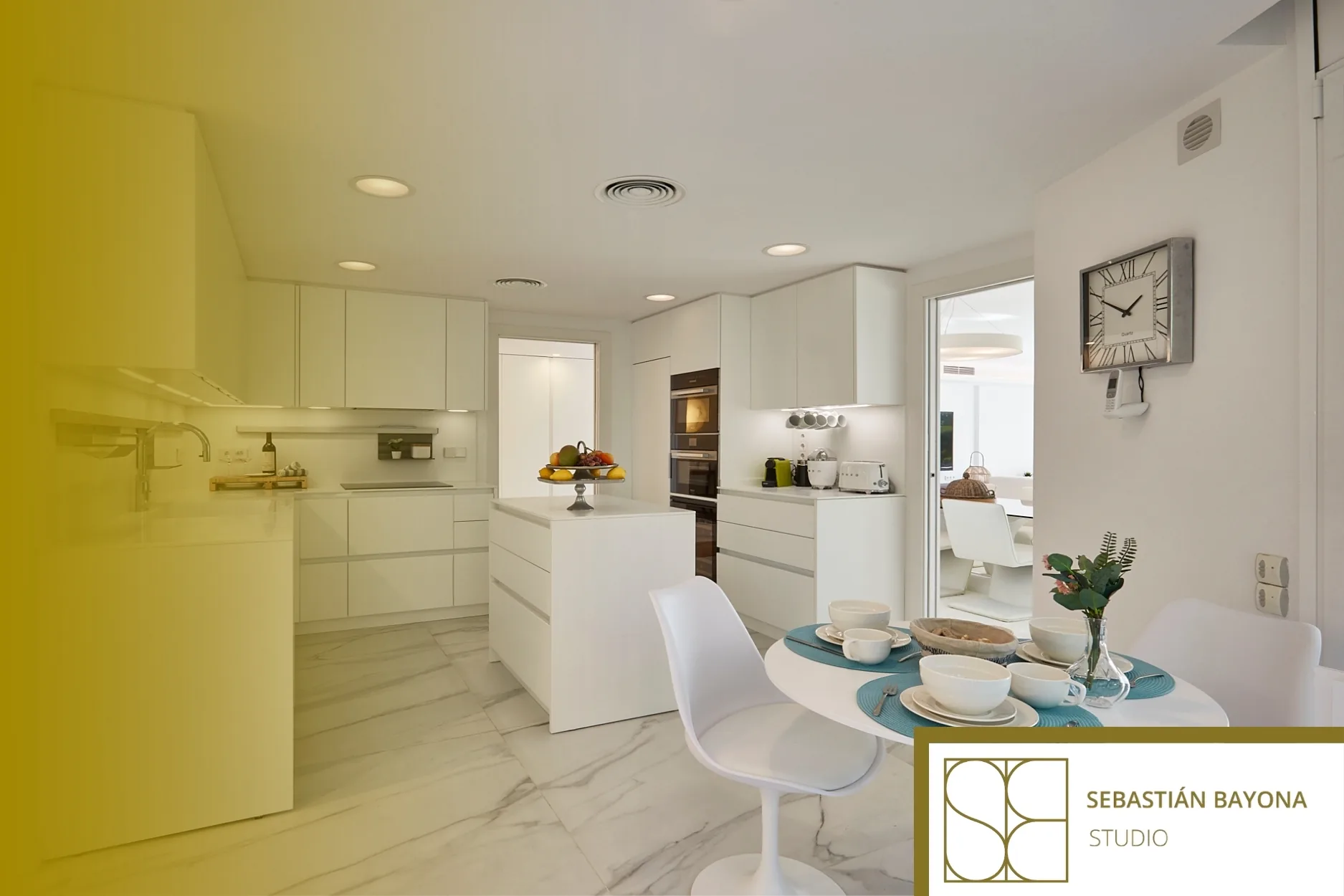
Bespoke furniture adds value when it solves a need that an off-the-shelf piece cannot address with the same precision: awkward geometry, specific storage, more than one function or a close relationship with the architecture. It is not automatically the better choice. If the room already works and flexibility matters, a well-proportioned standard piece may be the more sensible solution.
Bespoke should solve a problem rather than become a default
Made-to-measure furniture is most useful when there is a clear reason for it. The aim is not to cover every wall with fitted joinery, but to respond accurately to dimensions, circulation and everyday use.
A bookcase may need to work around a column. A storage wall may have to absorb an irregular corner. A bench might combine seating, support and storage without introducing several separate pieces.
In situations like these, custom design becomes part of the spatial solution.
Before designing a piece, however, the layout itself should be reviewed. Bespoke furniture can improve a difficult edge or clarify movement through a room, but it should not be used to compensate for a poorly resolved plan.
When bespoke furniture genuinely adds value
When standard dimensions do not fit the architecture
Sloping ceilings, niches, columns, uneven walls and tight transitions can all make standard furniture difficult to place.
A purpose-designed piece can respond to the exact geometry while preserving comfortable circulation and balanced proportions. The advantage is not simply using every available centimetre, but making the furniture belong naturally to the room.
When storage needs to fit specific belongings
Effective storage starts with knowing what it needs to contain. Books, clothing, tableware and audiovisual devices require different depths, heights and forms of access.
A made-to-measure piece allows shelves, drawers, doors and internal divisions to follow those requirements.
It can also reduce the need for several smaller storage pieces. When one element provides storage, support and visual order, the room can feel calmer and easier to move through.
When one element has to perform several functions
A desk integrated into storage, a work area that can be concealed or a piece that helps define two zones without building a full partition can all make good use of bespoke design.
The more permanent the solution, however, the more carefully its function should be considered. A fixed piece makes most sense when the underlying need is likely to remain stable.
When standard furniture is the better choice
Custom furniture is not inherently superior.
If a room accepts conventional dimensions and a well-designed standard piece already fits the space, function and material palette, commissioning something bespoke may add complexity without improving the result.
Freestanding furniture can be moved, replaced or reused if the room changes function. That flexibility is particularly useful where future needs are uncertain.
There is also a visual reason not to overuse fitted furniture. More storage is not always better if every wall becomes occupied. A successful interior needs negative space, balanced proportions and enough freedom to evolve.
Bespoke and standard pieces can work together
A home does not need to choose one approach exclusively. Bespoke and standard furniture can work together within the same interior.
A sensible strategy is often to reserve custom design for areas where precision offers a clear functional or spatial advantage and use carefully selected freestanding pieces elsewhere.
Sebastián Bayona Studio works with both bespoke solutions and catalogue furniture as part of its wider approach to residential interiors, considering furniture alongside layout, lighting, materials and decoration.
A freestanding piece can introduce lightness where a fitted wall would feel too heavy. Elsewhere, a custom element may bring order to difficult geometry. Coherence comes from the relationship between the elements rather than from making everything in the same way.
What to define before commissioning a bespoke piece
Before fabrication, establish exact dimensions, intended use, the items to be stored and the relationship with doors, sockets, lighting and surrounding furniture.
Materials, opening systems, cleaning and maintenance should also be considered. A piece may look perfectly resolved on a drawing but still be uncomfortable if everyday movements have not been properly anticipated.
When furniture is fixed to a wall or runs from floor to ceiling, coordination becomes especially important. Access to services should remain possible where required, and the piece needs to be practical to manufacture, install and maintain.
The real value is in solving the home more precisely
Bespoke furniture is worthwhile when it improves use, proportion or continuity in a way that a standard piece cannot. When it does not solve a specific problem, choosing a catalogue piece may be the more flexible and balanced option.
Sebastián Bayona Studio approaches furniture as one part of the overall interior. If you are planning a renovation and want to decide what should be integrated and what should remain freestanding, you can contact the studio to discuss your project.
FREQUENTLY ASKED QUESTIONS
When is bespoke furniture worth it?
It is most worthwhile when it solves a real constraint: awkward geometry, specific storage requirements, several functions in one area or a precise relationship with the architecture. If a standard piece already fits well, bespoke is not automatically better.
Does bespoke furniture always make better use of space?
It can make difficult areas more useful, particularly where standard dimensions leave awkward gaps. However, good space planning is not about filling every centimetre. Circulation, proportion and visual breathing room still matter.
Is it better to mix bespoke and standard furniture?
Often, yes. Bespoke pieces can be reserved for areas that need precision, while freestanding furniture provides flexibility and can be moved or replaced more easily. Both should still relate through scale, materials and use.
What should be decided before bespoke furniture is made?
Define the exact dimensions, intended use, items to be stored, opening systems, materials and maintenance. The design should also coordinate with doors, sockets, lighting and any services that need to remain accessible.